Currently Empty: $0.00
Mini Excavator Digging Depth, Reach, and Dump Height Explained for Buyers
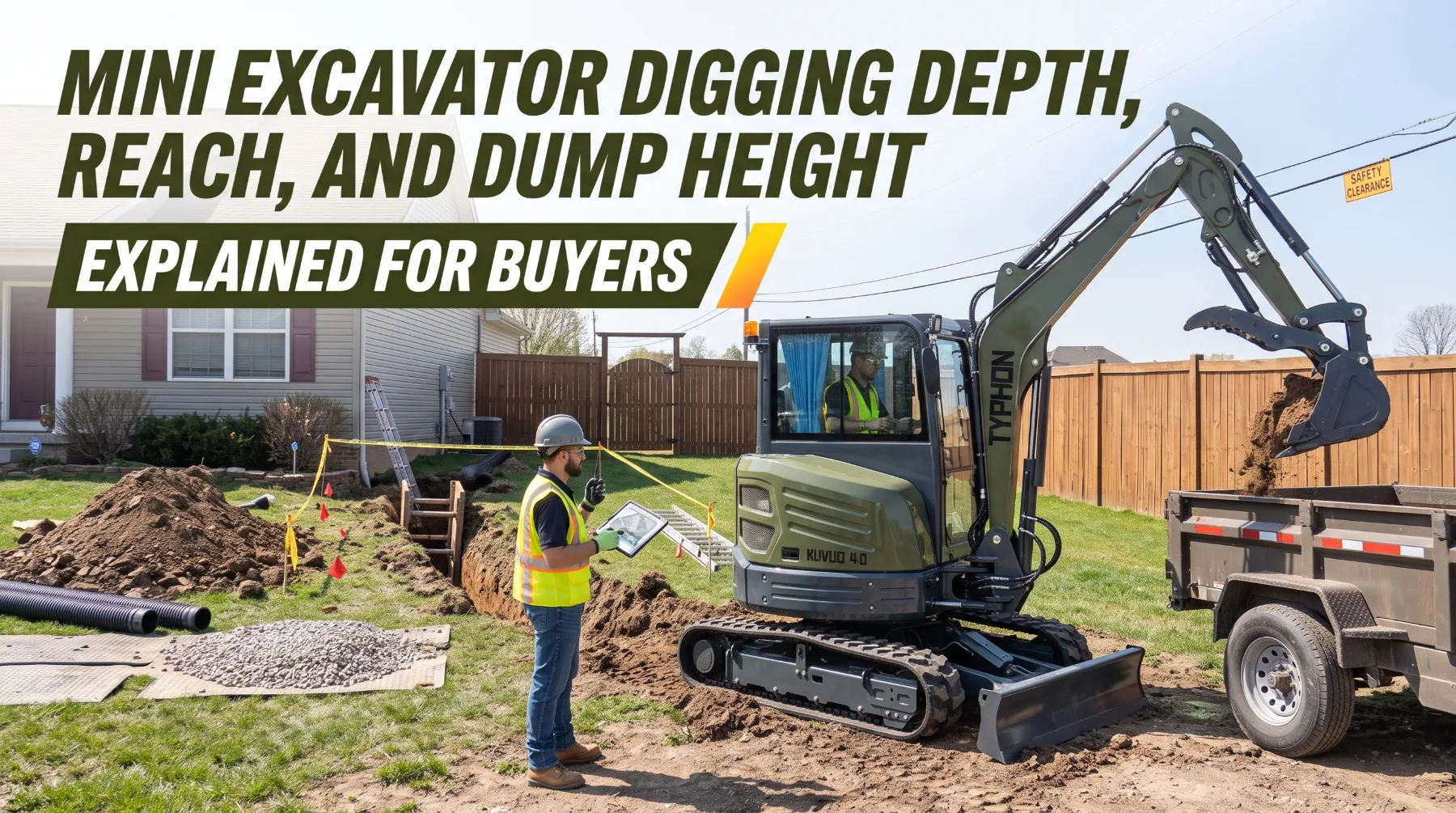
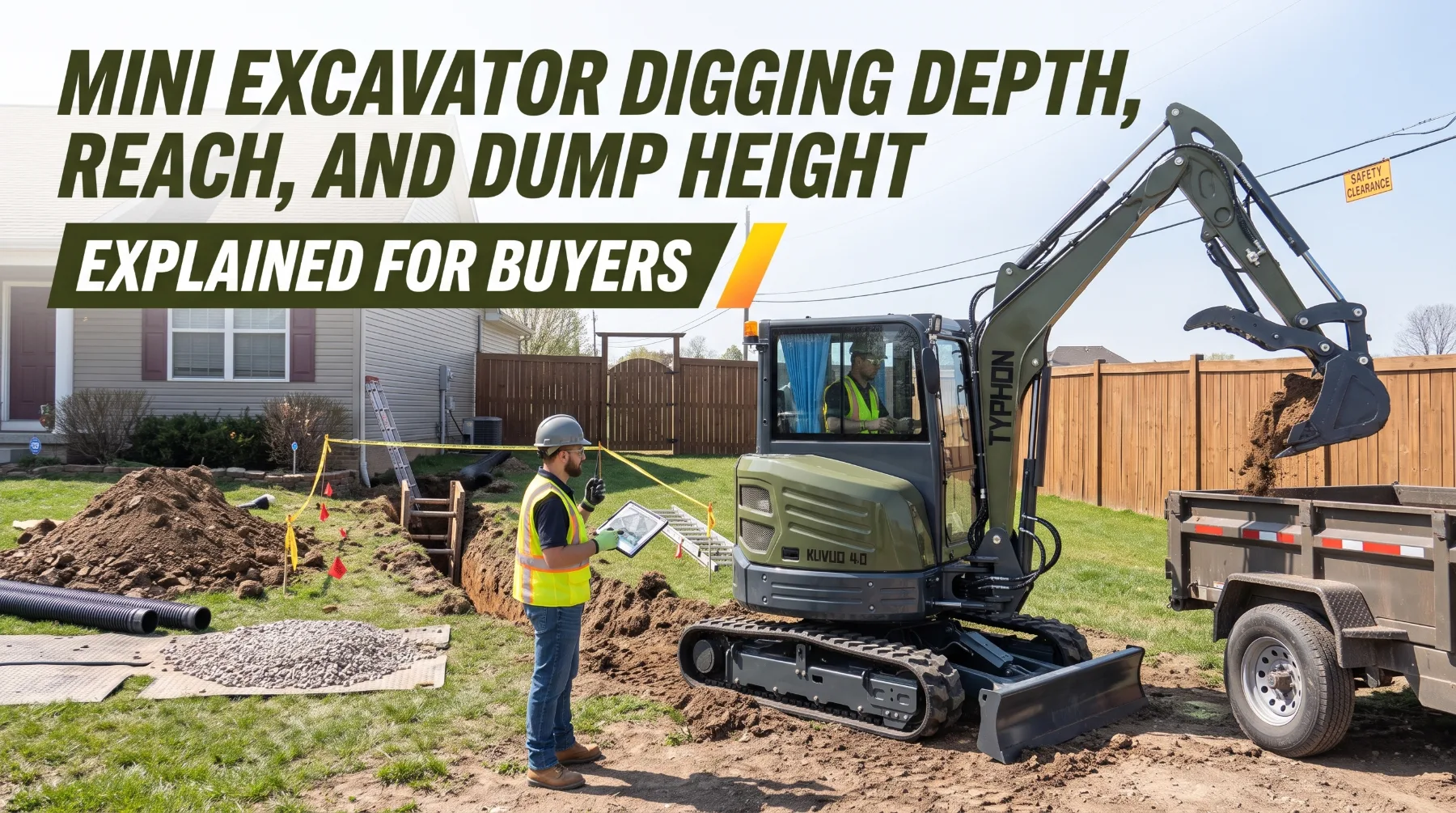
Picture a contractor who buys a mini excavator because its brochure lists a 10-foot digging depth. The first job is a drainage line along a house foundation, and the machine reaches the required depth with room to spare. The second job is loading spoil into a dump truck, and the bucket teeth scrape the sidewall on every pass. The third job is a backyard septic replacement, where the tight side yard keeps the machine from parking close enough to reach the far end of the excavation. The machine never changed. Each job simply asked for something different from its working envelope.
Digging depth, reach, and dump height are among the most quoted mini excavator specifications, and among the most misread. Each describes a different capability, measured from specific reference points at the machine's extreme positions rather than its comfortable working positions. Each also depends on boom design, arm length, bucket dimensions, and where the machine can actually be parked on site. A buyer who compares isolated numbers across brochures can end up with a machine that looks right on paper and struggles in the field. The manufacturer's operator's manual, specification sheets, lift charts, and applicable regulations remain the primary reference for every machine. In the United States, that includes OSHA excavation requirements.
Reading the Excavator Working Range Diagram
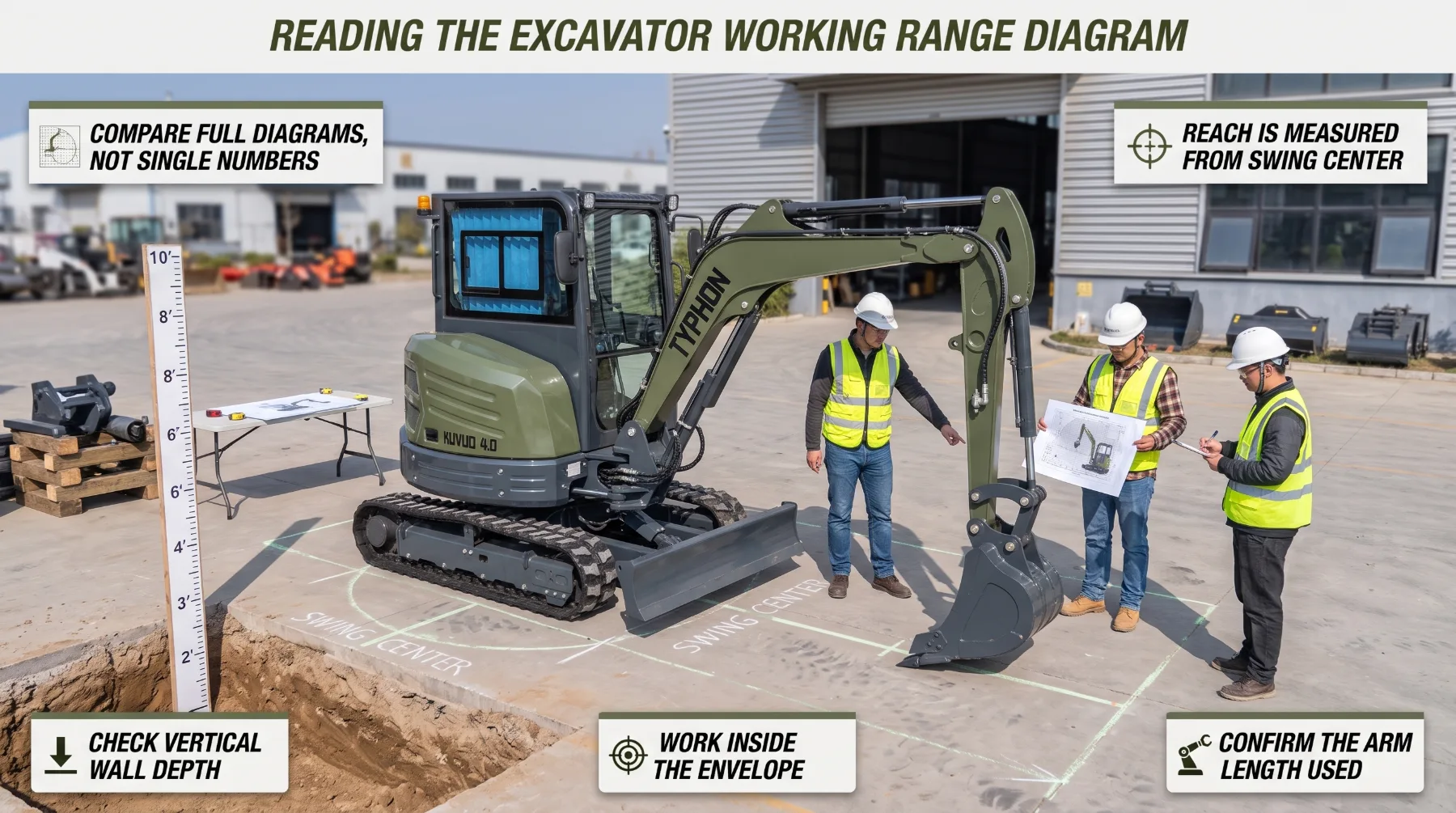
Nearly every mini excavator specification sheet includes a working range diagram. It's a side-view drawing of the machine with arcs and dimension lines showing how far the bucket can reach, how deep it can dig, and how high it can lift. Learning to read this diagram is the single most useful step a buyer can take, because it shows how the specifications relate to each other and to the ground.
A typical diagram includes maximum digging depth, maximum vertical wall digging depth, maximum reach, maximum reach at ground level, maximum digging height, maximum dump height, minimum swing radius, and dozer blade lift and drop. Many also show the full working envelope as a curved boundary so you can see every position the bucket can reach.
Diagram figures also represent extreme positions, usually with the boom, arm, and bucket at full extension or full curl. Operators rarely work at those limits for long. At maximum reach, the machine has the least digging force and the lowest lift capacity. Productive work happens well inside the published envelope. When comparing machines, don't match a single depth figure from one brochure against another. Check which arm length was fitted, which bucket was used, whether the machine had a swing boom and in what position, whether reach is measured from the swing center, and whether dump height is measured to the bucket teeth or another point.
Key takeaway: Use the full working range diagram instead of isolated figures, confirm the reference points and arm length behind each dimension, and remember that published figures describe extreme positions, not comfortable working positions.
Comparing Maximum Reach and Ground-Level Reach
Reach determines how far the machine can work from where it's parked. That matters most where the machine can't drive close to the work, such as along a foundation, across a planting bed, or beside a fence line. Specification sheets often list more than one reach figure, and the differences are important.
Maximum reach describes the farthest horizontal point the bucket teeth can reach anywhere in the working envelope. On many machines, that point sits slightly above or below ground level rather than exactly at it. Maximum reach at ground level describes the farthest point the teeth can reach while touching the ground surface. It's the more practical figure for grading, trenching from a distance, pulling material toward the machine, and cleaning up spoil. Most reach figures are measured from the swing center, so to find how far the bucket extends beyond the front of the machine, subtract the distance from the swing center to the front of the tracks or blade. If a machine lists 17.5 feet of reach at ground level and the swing center sits 4.5 feet behind the blade, the usable reach beyond the blade is 13 feet. That's the number that tells you whether the machine can reach across a 12-foot planting bed without driving onto it.
The farther the bucket reaches, the less force it delivers and the less weight the machine can safely lift. At full reach, the boom and arm cylinders work with longer lever arms, so digging force at the teeth drops. The load also sits farther from the machine's tipping line. Lift charts show rated capacity at specific heights and radii, over the front with the blade down and over the side. At maximum reach, capacity is often a small fraction of what the machine handles close in. Always use the lift chart for the exact arm, counterweight, and configuration fitted, and count the bucket, coupler, and any rigging as part of the load.
Many mini excavators also offer a boom swing or offset function that pivots the boom left or right independently of the upper structure, letting the machine dig alongside walls, fences, and foundations without repositioning. As the upper structure rotates, the counterweight swings through its own radius. Mark and barricade the full swing radius so no one can be struck or pinned between the counterweight and a structure. Zero tail swing and reduced tail swing machines suit tight sites but may trade some lifting capacity compared with conventional designs.
Key takeaway: Use reach at ground level for most practical work, subtract the distance from the swing center to the blade to find usable reach, and check the lift chart, since digging force and lift capacity fall sharply as reach increases.
Understanding the Effect of Arm Length
Many mini excavators are available with more than one arm length, most commonly a standard arm and a long arm. The choice changes almost every dimension on the working range diagram, along with digging force, lift capacity, and stability. A long arm places the bucket farther from the boom, which adds maximum digging depth, greater reach at ground level, and greater digging and dump height. For deep utility trenches, wide excavations, and sites where the machine must stay well back from an edge, those gains can save time and reduce repositioning.
The same geometry that adds reach also reduces leverage. With the bucket farther from the arm cylinder's pivot, the cylinder's force acts on a longer lever, so arm digging force typically drops. Bucket digging force may stay similar since it depends on the bucket cylinder and linkage, but lift capacity drops because the longer arm adds weight at the front and places loads farther from the tipping line. Many manufacturers publish separate lift charts for each arm length. Some offer additional counterweight for long arm configurations. Use only approved counterweights, installed exactly as instructed.
The longer the arm, the more the machine reacts to loads at the bucket. Digging hard at full reach can lift the tracks, slide the machine toward the cut, or rock the upper structure. Operators can help by working with the dozer blade lowered on the digging side, positioning the machine on firm, level ground, and keeping heavy work closer in. A standard arm suits general digging, loading, compacted soils, and attachment work such as breakers and thumbs. A long arm suits deep trenching, long reaches across beds or water features, and work where the machine must stay well back. Arm length also affects attachment compatibility. A heavy breaker, auger, or tiltrotator on a long arm can approach the machine's stability limits, so confirm that each attachment's weight is approved for the configuration and that hydraulic requirements match the machine.
Key takeaway: A longer arm adds depth, reach, and height but reduces arm digging force and lift capacity, so choose the arm for your most frequent work and check the lift chart and attachment limits for that exact configuration.
Matching Working Dimensions to Transport and Site Layout
The best working envelope doesn't help if the machine can't get to the job or fit where it needs to work. Mini and compact excavators span a wide range. A 1-ton class machine typically weighs 2,000 to 3,500 pounds and reaches 5.5 to 7 feet deep. A 2- to 3-ton class machine typically weighs 4,000 to 7,000 pounds and reaches 7.5 to 9.5 feet deep. A 3.5- to 5-ton class runs 8,000 to 11,000 pounds with 9.5 to 11.5 feet of depth, while a 6- to 8-ton class runs 13,000 to 18,000 pounds with 12 to 15 feet. Use these ranges for early planning only and confirm exact figures from the manufacturer's specifications for the specific configuration.
Operating weight drives transport decisions. Confirm that the trailer's payload, calculated as its gross vehicle weight rating minus its empty weight, covers the machine plus attachments and securement equipment. Check axle, tire, hitch, and tow vehicle ratings as well. Heavier combinations may trigger commercial vehicle and licensing requirements. Secure the machine only at the manufacturer's designated tie-down points, with the boom and attachment lowered and positioned as the manual instructs.
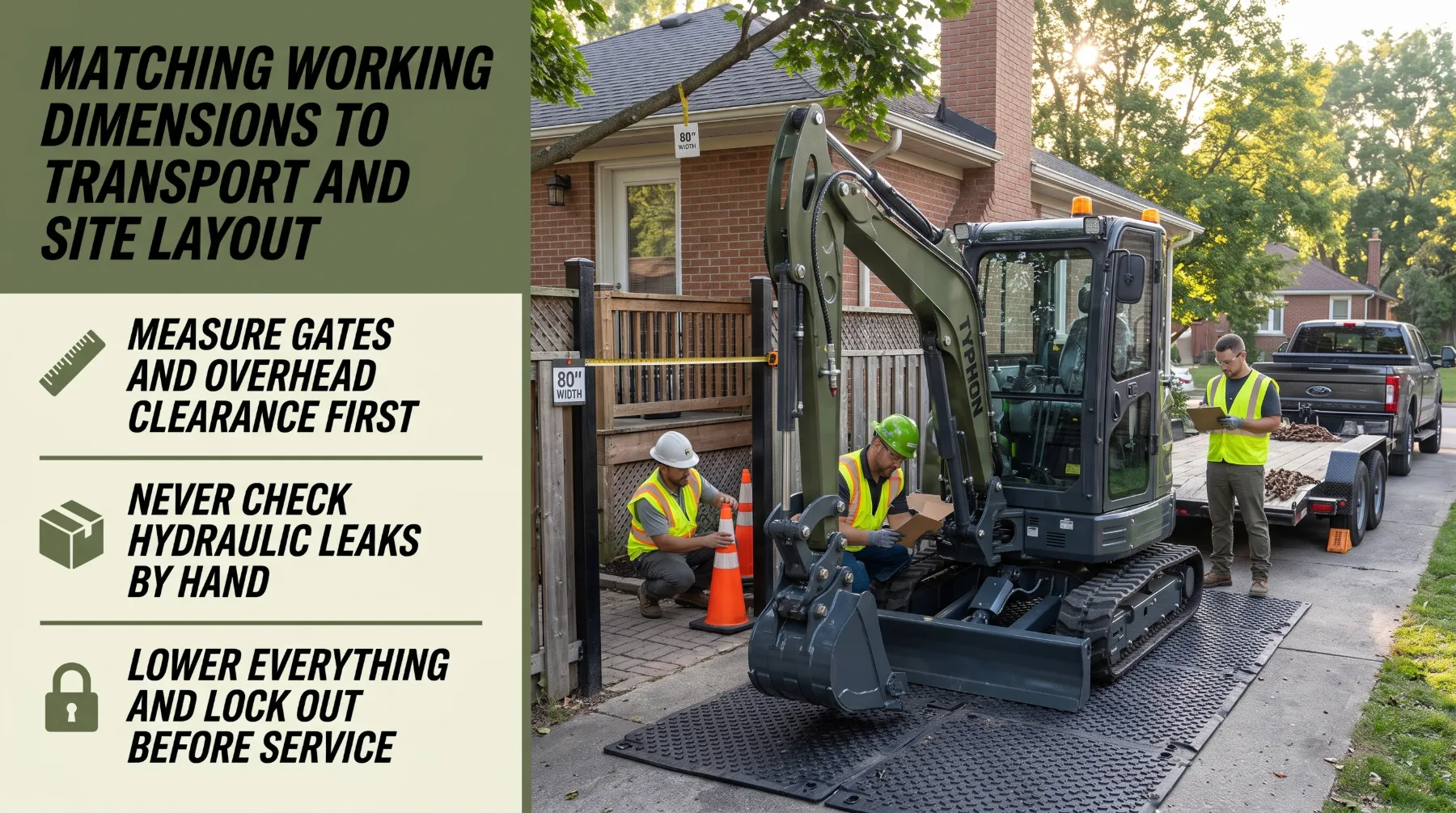
Before buying or renting for a restricted site, walk the full route from the street to the work area. Measure gate and side yard widths at their narrowest points, check overhead clearance under eaves, porches, tree limbs, and utility drops, assess ground firmness across lawns and recent backfill, and note slopes and underground hazards such as septic tanks and irrigation lines. Some 1-ton machines feature retractable undercarriages that narrow the tracks to under 3 feet for passing through gates. Retract tracks only for travel as the manufacturer instructs, and extend them fully before digging or lifting.
Once the machine arrives, plan the parking position so the work falls within comfortable reach, not at the edge of the envelope. Lower the dozer blade on the digging side for added stability, use ground protection mats over finished lawns and pavers, and barricade the swing radius. Keep the counterweight clear of walls, decks, and fences through the full swing. Use a spotter whenever visibility is limited or structures sit close by.
Before each shift, check tracks for tension and damage, inspect the boom, arm, bucket, pins, and quick coupler, and check hydraulic hoses and fittings for abrasion, cracks, and leaks. Never use your hand to search for a hydraulic leak. Fluid escaping through a pinhole under pressure can penetrate skin and cause an injection injury. The wound may look minor at first, but it's a medical emergency that requires immediate surgical treatment. Use a piece of cardboard or wood, wear gloves and eye protection, and keep your face out of line with any suspected leak. If anyone is struck by escaping hydraulic fluid, get emergency medical care at once and tell medical staff it's a hydraulic injection injury. Before any service, lower the boom, arm, bucket, and blade fully to the ground, shut down the engine, remove the key, relieve hydraulic pressure, and apply your personal lock and tag. Never work beneath a raised boom or arm held only by hydraulics.
Key takeaway: Match working dimensions to operating weight, transport capacity, and site access, position the machine so work falls inside its comfortable envelope, barricade the swing radius, check leaks with cardboard rather than your hands, and lock out before any service.
Conclusion
Digging depth, reach, and dump height describe separate parts of a mini excavator's working envelope, and each is measured from specific reference points at extreme positions. Reading the full working range diagram gives buyers a clear picture of what a machine can do. Vertical wall depth often matters more than maximum depth for trenching. Reach at ground level, measured from the swing center, defines how far the machine can really work from where it's parked. Dump height must clear the vehicles you load with margin to spare. Arm length shifts every one of these figures while trading away digging force and lift capacity.
Frequently Asked Questions
Where can I find a mini excavator's digging depth?
Check the manufacturer's specification sheet and working range diagram. Most list maximum digging depth, and many also list maximum vertical wall digging depth, which is often more useful for trenching. Confirm which arm length and bucket were fitted when the figures were measured, since a long arm usually increases depth. Plan with a margin for bedding, grade changes, and positioning limits rather than relying on the maximum figure.
Is maximum reach measured at ground level?
Not always. Maximum reach describes the farthest point the bucket teeth reach anywhere in the working envelope, which may sit slightly above or below ground level. Maximum reach at ground level describes the farthest point while touching the ground surface. Both are usually measured from the swing center, so subtract the distance from the swing center to the front of the blade to find usable reach beyond the machine.
Does a longer excavator arm always improve performance?
No. A longer arm increases digging depth, reach, and dump height, but it usually reduces arm digging force and lowers rated lift capacity at the same radius. It can also make the machine more sensitive to heavy loads and attachments at full reach. Choose the arm that suits your most common tasks, and check the lift chart and attachment approvals for that exact configuration.
Why is dump height important for buyers?
Dump height determines whether the excavator can clear the sidewalls of trucks, trailers, containers, and hoppers when discharging material. Compare the published dump height for your actual bucket against the highest sidewall you load, then add a clearance margin of at least 1 to 2 feet for bucket rotation and heaped material. Insufficient dump height slows loading, risks striking the vehicle, and tempts operators into unsafe positioning.