Currently Empty: $0.00
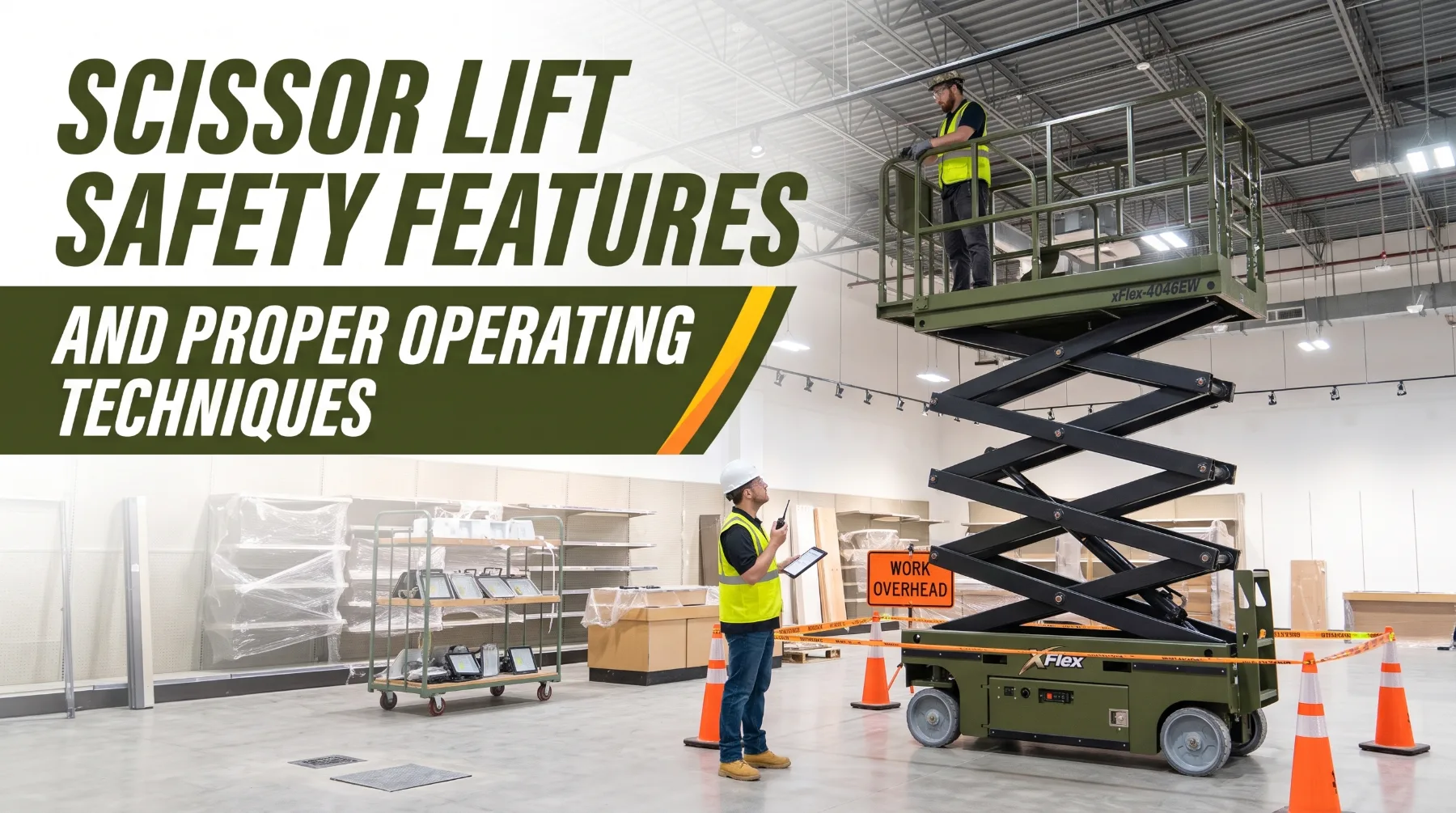
Scissor Lift Safety Features and Proper Operating Techniques
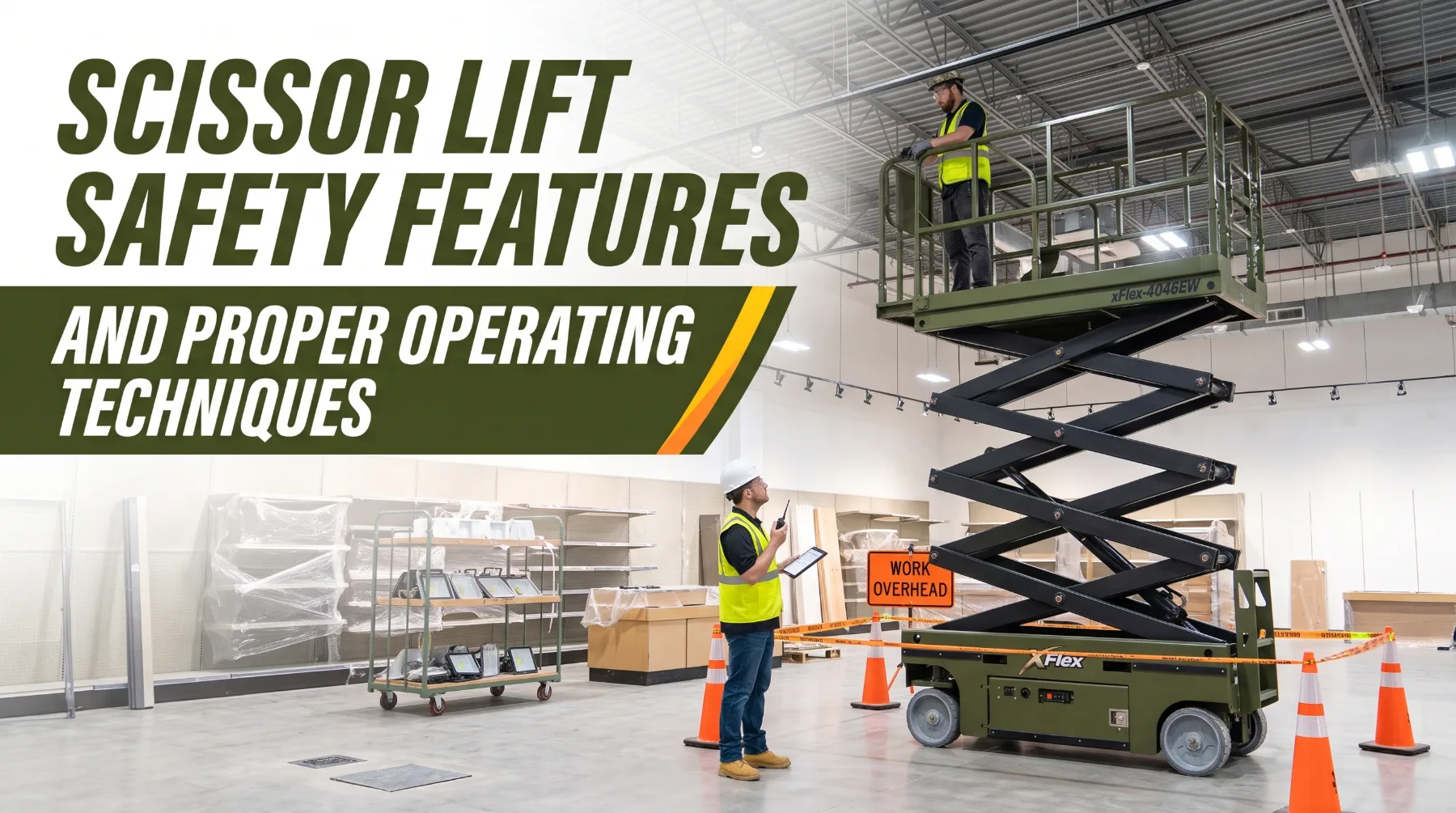
A scissor lift can look like one of the simplest machines on a jobsite. It goes straight up, comes straight down, and moves slowly across a floor. That simplicity is exactly why crews underestimate it. An electrician leans over the top rail to reach one more fixture. A painter stands on the mid-rail to cut in along a ceiling line. An operator ignores a tilt alarm because the floor looks level enough. A crew drives the platform at height without checking the beam overhead. Each of these is a small decision, and each can lead to a fall, a tip-over, or a crushing injury.
Modern scissor lifts include a strong set of protective systems. Guardrails and self-closing gates contain the platform. Emergency stops and lowering systems give operators and ground crews control when something goes wrong. Tilt sensors, load sensing, pothole protection, and elevated drive limits keep the machine within its design limits. These safety features are effective only when operators understand their purpose, limitations, and proper use. Crews should know how to operate the equipment safely and follow procedures that prevent hazardous situations rather than relying on safety devices as a last line of protection. The manufacturer's operator's manual, equipment specifications, workplace safety procedures, and applicable regulations should guide all operating practices. Maintenance, inspections, operator training, and safe work procedures should remain consistent with the requirements established for the equipment and its intended working environment.
Guardrails, Entry, and Fall Protection
On a scissor lift, the guardrail system is the primary fall protection. It surrounds the platform, keeps workers and materials inside, and protects people below from falling objects. A typical system includes top rails around the full perimeter, mid-rails that close the gap between the top rail and the platform floor, toe boards that stop tools and debris from sliding off the edge, and an entry gate at the access point, often self-closing on newer machines. It only works when it is complete, undamaged, and used as designed.
Secure entry and exit follow a consistent routine. Confirm the platform is fully lowered before stepping on or off. Use only the designated steps and handholds, maintain three points of contact while climbing, and close the entry gate fully before touching the controls. Never climb onto the platform over the rails or from an adjacent structure. Many models use folding guardrails to reduce stowed height for doorways or transport. Fold and unfold them only as the manufacturer instructs, install every pin the manual specifies, and never raise the platform with any rail section folded or missing hardware.
Guardrails protect only workers who stay inside them. Keep both feet on the platform floor at all times. Never sit on, stand on, or climb the guardrails, never lean over them to extend reach, and never place ladders, buckets, or planks on the platform to gain height. If the work is out of reach, the answer is straightforward: lower the platform, reposition the machine, and raise it again. That takes a minute. A fall from height does not.
OSHA generally treats scissor lifts as mobile scaffolds and does not typically require personal fall arrest when a complete guardrail system is in place. Many manufacturers, employers, and sites still require a harness and lanyard. Where personal fall protection is used, attach only to the manufacturer's designated anchor points and use a restraint lanyard short enough to keep the worker on the platform.
Key takeaway: Treat a complete, inspected guardrail system as the primary fall protection, enter and exit only with the platform fully lowered and the gate latched, keep both feet on the platform floor, and attach personal fall protection only at designated anchor points.
Emergency Stops, Lowering Systems, and Stability Controls
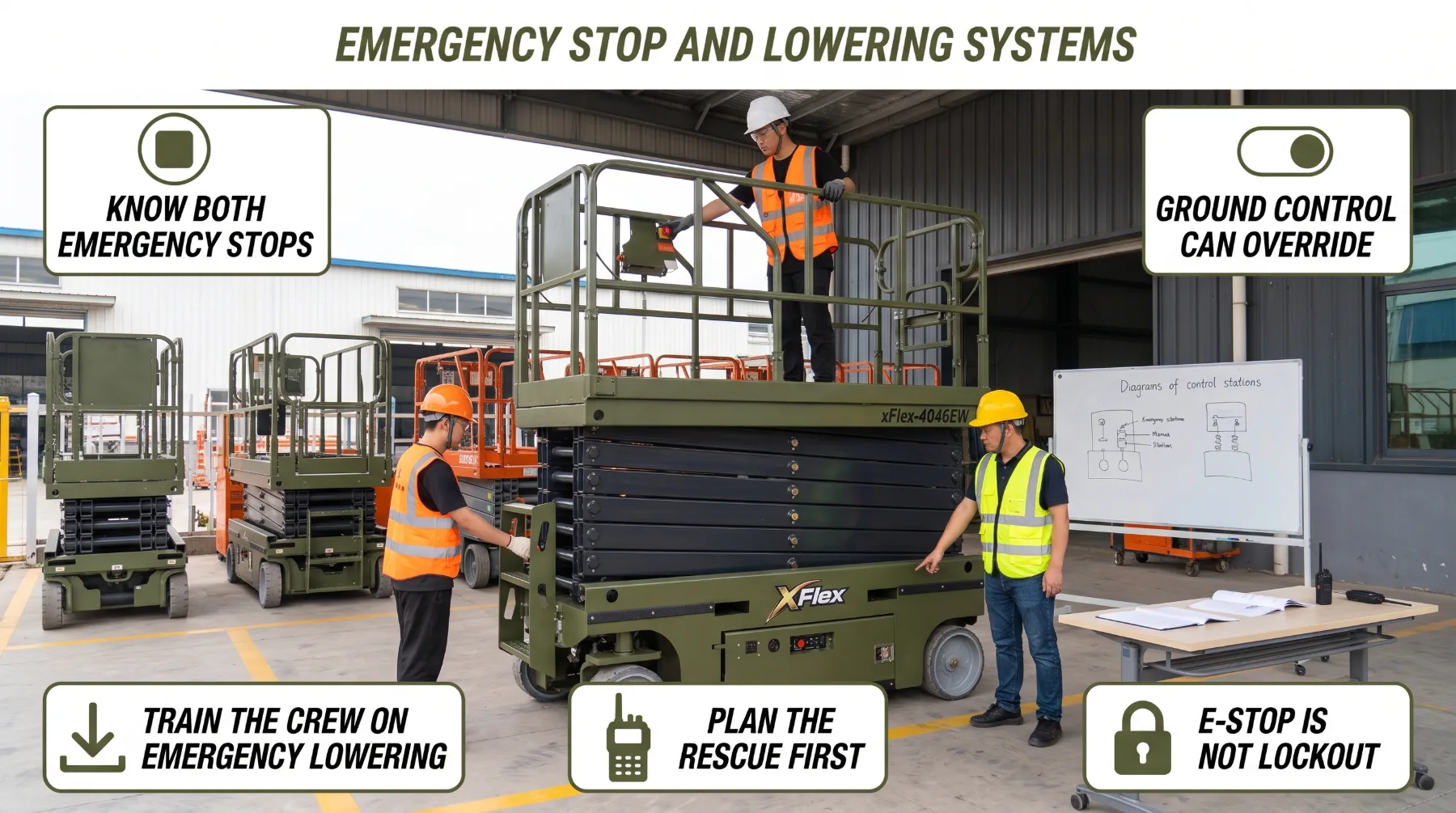
Every scissor lift has two control stations, one on the platform and one at ground level, each with a red mushroom-head emergency stop button. Pressing either halts machine functions immediately. The ground control panel also typically includes a selector that lets ground personnel take over from a platform operator who is incapacitated. Emergency stops are not lockout devices. A machine stopped this way can restart once the button is reset. Before anyone performs inspection or maintenance, the machine must be fully shut down and locked out.
Stability systems support safe operation from a different angle. Most scissor lifts include a tilt sensor that measures chassis angle. When the machine is out of level beyond the manufacturer's limit, the system sounds an alarm and typically prevents further raising or elevated driving. Pothole protection bars deploy beneath the chassis as the platform rises, reducing clearance so a wheel can't drop into a depression. Elevated drive speed reduction slows travel once the platform rises above a set height. These systems react to problems rather than preventing them, which is why the ground inspection matters so much. Walk the work area before setup and look for holes, drains, soft soil, loose debris, unprotected edges, and changes in floor level. When the tilt alarm sounds, stop, lower the platform completely, and move to firm, level ground before raising again. Never bypass a stability device or tape over an alarm.
Key takeaway: Know both emergency stops and train the ground crew on emergency lowering and ground control override. Inspect the ground before setup, respond immediately to tilt alarms, never bypass stability devices, and follow indoor and outdoor wind ratings.
Platform Capacity and Load Planning
Every scissor lift has a rated platform capacity shown on the capacity decal and in the operator's manual. That rating covers everything on the platform: every worker, their clothing, PPE, harnesses, and tool belts, plus power tools, battery packs, materials, containers, and debris that accumulates during work. Exceeding it reduces stability, overloads the structure and lift cylinder, and can cause the machine to tip at height. Occupancy limits apply separately from weight, so a platform may allow only one person even when the weight rating appears generous.
Calculating the load before raising takes a few minutes and prevents the most common overload scenarios. Add every worker with their gear, all tools and batteries, and the materials going up on each trip. If the total exceeds the rating, the fix is usually simple: fewer materials per trip, one worker at a time, or a machine with a higher rating. Read every line on the capacity decal, not just the largest number. Many machines list separate indoor and outdoor ratings, with lower capacity and occupancy outdoors because wind adds force to the platform. Extension decks typically carry their own lower limit, often well below the main platform rating.
Many newer machines include load sensing systems that sound an alarm and prevent raising when the platform is overloaded. These add a valuable layer of protection, but they don't replace careful load planning. Never bypass, disable, or override a load sensing system. If it stops the lift, lower the platform, remove weight, and recheck. Distribute materials evenly across the platform, keep heavy items near the center, and secure items that could shift or fall. Manufacturers also specify a maximum manual side force limiting how hard workers can push or pull against walls and ceilings. Brace tools appropriately and avoid sudden forceful movements.
Key takeaway: Count every worker, tool, and material against the correct indoor, outdoor, and extension deck ratings, distribute and secure the load, respect side force limits, and never bypass a load sensing system.
Driving, Positioning, and Overhead Hazards
Most scissor lift incidents involve movement. The machine drives into a hole, the platform rises into a beam, or a worker is pinned against a structure while repositioning. Whenever practical, drive with the platform fully lowered. Keep speed suited to the floor and nearby activity, watch the full travel path, and use a spotter where visibility is limited. Where elevated driving is permitted, it applies only under the manufacturer's conditions, which typically require a firm, level, smooth surface within tilt limits, automatically reduced drive speed, and a clear travel path with no obstructions overhead. Never attempt to defeat elevated drive limits.
Place the lift so the work sits within comfortable reach with both feet on the platform floor. A productive working position usually puts the task roughly 4 to 5 feet above the platform floor, at chest-to-shoulder height. If the task requires stretching, lower the platform and reposition. Use the extension deck only where the manufacturer permits it, and lock it before stepping onto it. Set an exclusion zone with cones or barrier tape around the base and beneath the platform, and route pedestrians and vehicles away from the work area.
Raising near overhead structures creates one of the most serious risks. Crushing incidents occur when an operator is pinned between the guardrail or control box and a beam, joist, duct, or pipe. Before raising, identify every obstruction in the work zone, raise slowly as the platform approaches structures, and keep your body inside the guardrails. Where secondary guarding devices are fitted, confirm they work during the function test.
Scissor lifts are not insulated, and contact with an energized power line, or even close approach, can be fatal to everyone on the platform. Treat every overhead line as energized unless the utility owner confirms otherwise. In the United States, OSHA generally requires at least 10 feet of clearance from lines up to 50 kV, with greater distances for higher voltages. Assign a dedicated spotter wherever the platform could approach that limit, and remember that lines can sway in the wind.
Key takeaway: Drive stowed whenever practical, elevated only where the manufacturer permits and conditions allow, position for comfortable reach, raise slowly near overhead structures, maintain at least 10 feet from power lines up to 50 kV, and keep an exclusion zone around the base.
Pre-Operation Inspection, Training, and Lockout
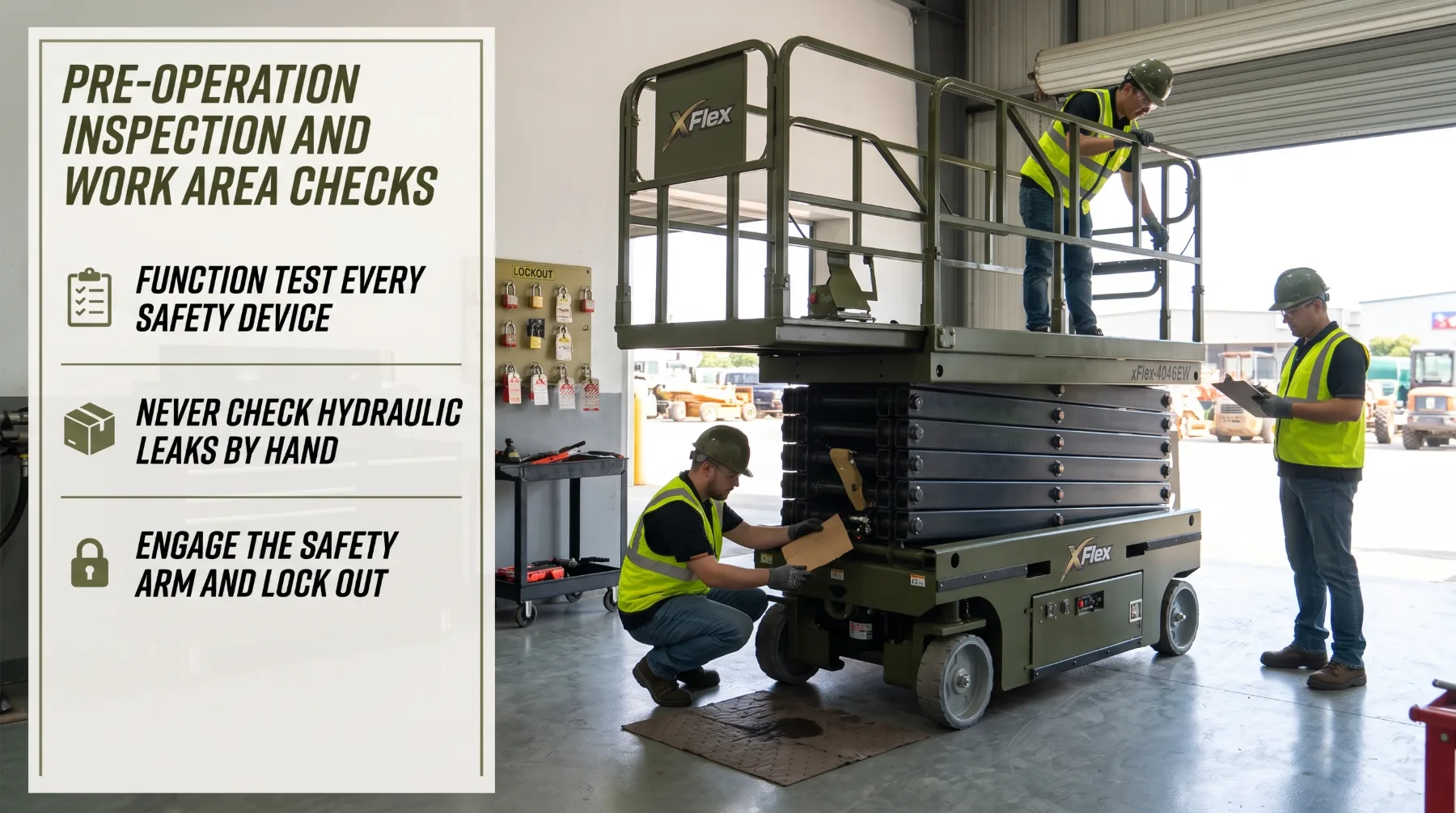
Safety features protect crews only when they work. A consistent pre-operation inspection and function test at the start of every shift confirms they do. Follow the manufacturer's pre-start checklist, working around the machine in the same order each time. Check guardrails, mid-rails, toe boards, rail pins, and the entry gate for damage and reliable latching. Confirm capacity and warning decals are present and legible. Inspect tires, scissor arms, pivot pins, pin retainers, the lift cylinder, pothole protection bars, and the maintenance safety arm. Check battery charge or fuel and fluid levels.
Inspect hydraulic hoses, fittings, and the lift cylinder for leaks and abrasion. Never use your hand to search for a hydraulic leak. Fluid escaping through a pinhole under pressure can penetrate skin and cause an injection injury. The wound may look minor at first, but it is a medical emergency that requires immediate surgical treatment. Use a piece of cardboard or wood to locate leaks, and wear gloves and eye protection. If anyone is struck by escaping hydraulic fluid, get emergency medical care at once and tell medical staff it is a hydraulic injection injury.
Perform the function test in a clear area, starting at the ground control panel. Test emergency stops at both stations, ground control raise and lower, platform enable, lift, lower, drive, and steering, brakes, pothole protection deployment, the tilt alarm, elevated drive speed reduction, load sensing indication, motion alarms, horn, beacon, and emergency lowering. If any function fails, tag the machine out until a qualified technician repairs it. Walk the work area before positioning the lift, checking for holes, drains, debris, slopes, overhead hazards, and floor load capacity.
Before any service beneath the platform, engage the maintenance safety arm, shut down the machine, remove the key, disconnect battery power, and apply your site's lockout procedure. Never work beneath a platform supported only by hydraulic pressure.
Key takeaway: Inspect guardrails, decals, structure, and hydraulics every shift, check leaks with cardboard, function test every safety device before use, keep periodic inspections and training current, and lock out with the maintenance safety arm engaged before any service.
Conclusion
Scissor lift safety depends on well-designed equipment and disciplined operation working together. Guardrails and a latched entry gate provide the primary fall protection, but they only work when workers keep both feet on the platform floor. Emergency stops and lowering systems give operators and ground crews control in a crisis, provided everyone trains on them before work begins. Tilt sensors, pothole protection, and elevated drive limits warn of unsafe conditions but never replace a careful ground inspection. Load sensing supports, but does not substitute for, accurate capacity planning. Careful driving, comfortable positioning, overhead awareness, power line clearance, and exclusion zones prevent the movement-related incidents behind many serious injuries.
Frequently Asked Questions
What is the purpose of scissor lift guardrails?
Guardrails are the primary fall protection on a scissor lift. Top rails, mid-rails, toe boards, and a latched entry gate form a barrier that keeps workers, tools, and materials on the platform and protects people below. Workers must keep both feet on the platform floor and never sit on, stand on, lean over, or climb the rails. Where personal fall protection is required, attach only to the manufacturer's designated anchor points.
Do tilt sensors make it safe to operate on uneven ground?
No. A tilt sensor detects that the chassis is already out of level and typically restricts raising or elevated driving. It cannot detect holes, soft ground, or weak floor covers before they become a problem. Inspect the ground before setup, stay within the manufacturer's slope and tilt limits, and when the alarm sounds, lower the platform and move to firm, level ground. Never bypass or disable the sensor.
Can workers exceed platform capacity if an overload alarm does not activate?
No. Rated capacity is a firm limit whether or not an alarm sounds. Load sensing systems can be affected by calibration or load distribution. Calculate the full load, including every worker, PPE, tools, and materials, against the correct indoor, outdoor, and extension deck ratings before raising. Never bypass the load sensing system.
Can a scissor lift move while elevated?
Only when the specific model permits it and only under the conditions the manufacturer specifies. Where elevated driving is allowed, it typically requires a firm, level, smooth surface with drive speed automatically reduced above a set height. Some models restrict or cut out driving above certain heights. Always check overhead and the travel path first, keep everyone clear, and never defeat elevated drive limits.