Currently Empty: $0.00
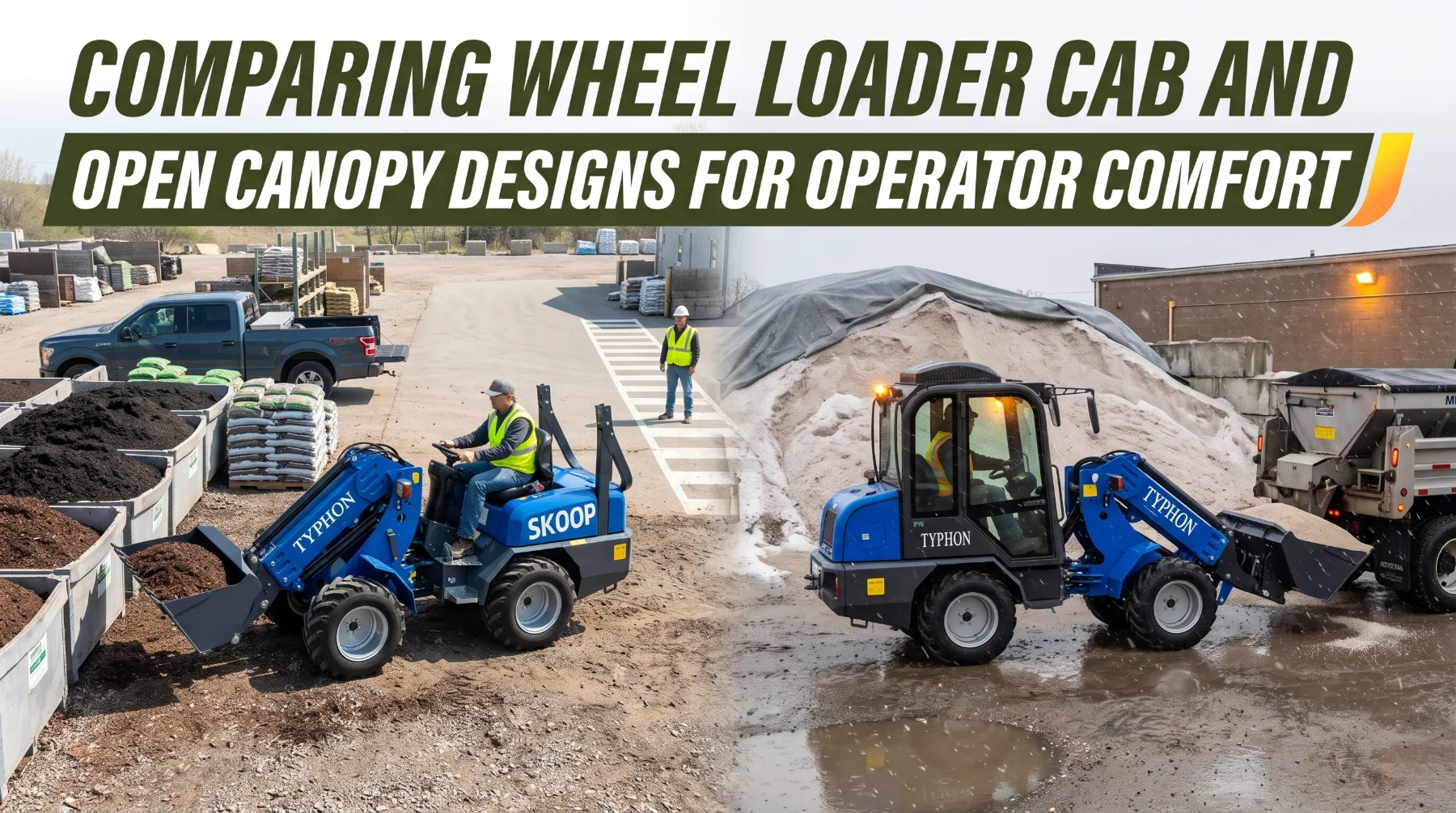
Comparing Wheel Loader Cab and Open Canopy Designs for Operator Comfort
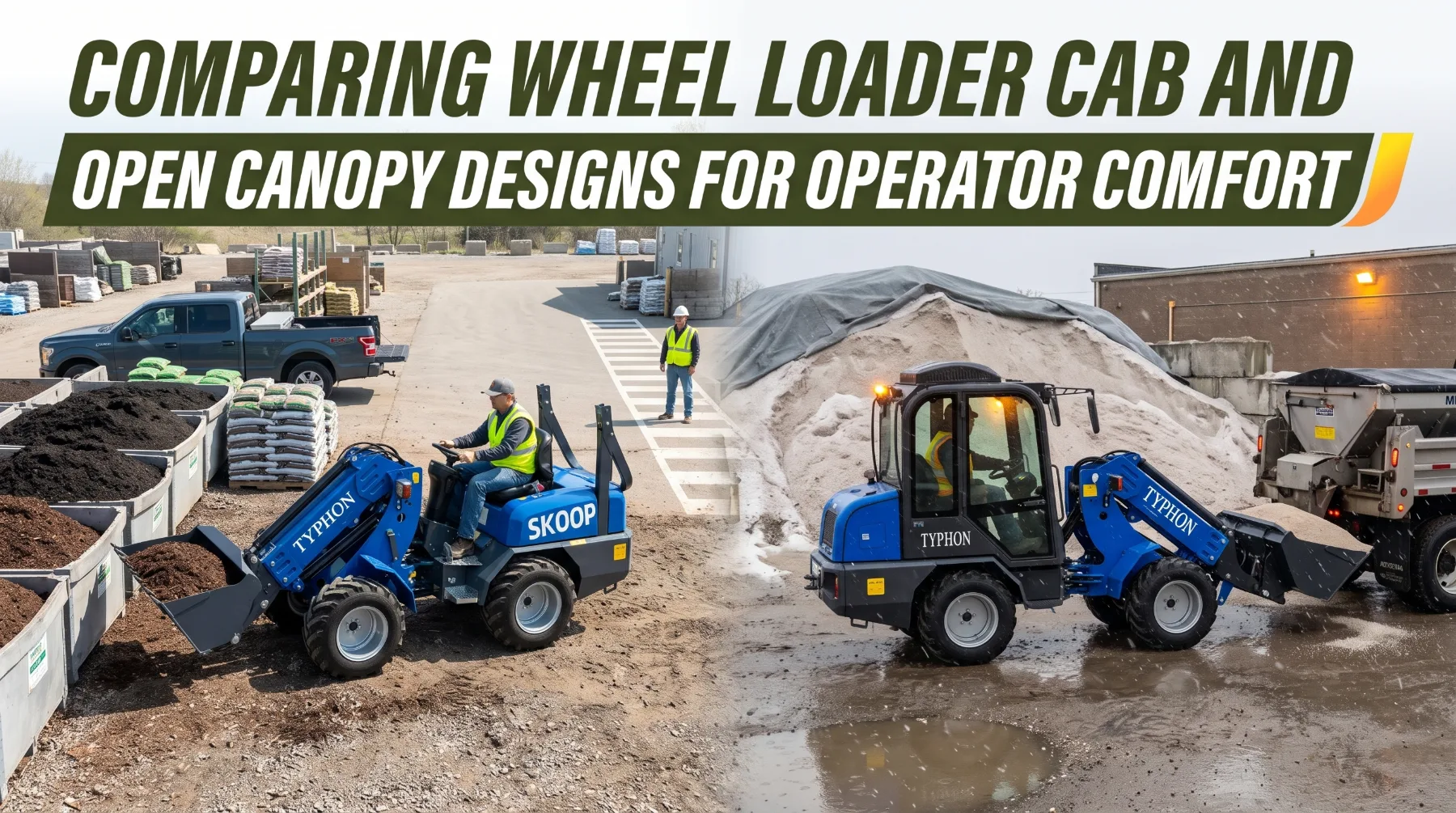
A landscape supply company runs two compact wheel loaders from the same yard. From April through October, the first loader fills customer trucks with mulch, topsoil, and decorative stone. Its operator climbs down a dozen times an hour to talk with customers, check tickets, and guide pickups into position. In November, the business switches to winter work. The second loader spends long, dark mornings loading salt and sand into municipal spreaders while sleet blows across the yard. When the owner budgets for replacements, she realizes the two machines don't need the same operator station. One job rewards easy access and open airflow. The other demands heat, defrost, and shelter for hours at a time.
Wheel loaders handle material, build stockpiles, load trucks, and prepare sites across construction, agriculture, landscaping, and industrial operations. The operator environment shapes comfort, visibility, and how well the machine suits different working conditions. Enclosed cabs and open canopy configurations each offer real advantages. Neither is the right answer for every buyer.
The best choice depends on climate, operating hours, dust and noise exposure, entry and exit frequency, and the safety requirements of the work. This guide explains how each design performs so you can match the operator station to your daily workload.
Open Canopy Design
An open canopy wheel loader gives the operator a more exposed working position under an overhead protective structure. There are no doors or full side windows separating the operator from the surrounding site. Many compact and smaller wheel loaders are offered with canopy configurations, especially for agricultural, landscaping, and light material handling work.
The canopy's protection comes from its certified structure. Wheel loader canopies are typically built as a rollover protective structure (ROPS). Many also meet falling object protective structure (FOPS) requirements, but this varies by model and configuration. Confirm which protective ratings apply to the exact machine before you assume overhead protection from falling material. These structures protect the operator only when used as designed. Operators must wear the seat belt whenever the machine is running. In a rollover, the belt keeps the operator inside the protective zone. Never drill, weld, or modify a ROPS or FOPS structure, since changes can weaken it and invalidate its certification.
An open canopy offers several practical benefits. It allows fast entry and exit for work that requires frequent dismounting, provides natural airflow that keeps operators cooler in mild, dry weather, and enables direct communication with customers, ground crew, and truck drivers. Some directions offer unobstructed views without glass, reflections, or fogging. Simpler construction means fewer cab components to maintain, and in many cases, a lower purchase price compared with equivalent enclosed configurations.
The trade-off is exposure. Canopy operators face rain, wind, cold, heat, sun, dust, and noise more directly. Material flung from tires, dust rising from dry stockpiles, and engine noise all reach the operator without a barrier. In many jobs, suitable personal protective equipment becomes essential. That may include eye protection, hearing protection, high-visibility clothing, and respiratory protection where an exposure assessment requires it. Some manufacturers offer weather kits, side screens, or partial enclosures for canopy models. Only use accessories approved for the exact machine, since aftermarket panels can block visibility, interfere with the emergency exit path, or affect the protective structure.
Key takeaway: An open canopy protects operators through its certified ROPS structure and, where rated, FOPS protection, while offering fast access, natural airflow, and simpler construction. It leaves operators more exposed to weather, dust, and noise, so verify protective ratings and plan suitable PPE.
Visibility and Operating Awareness
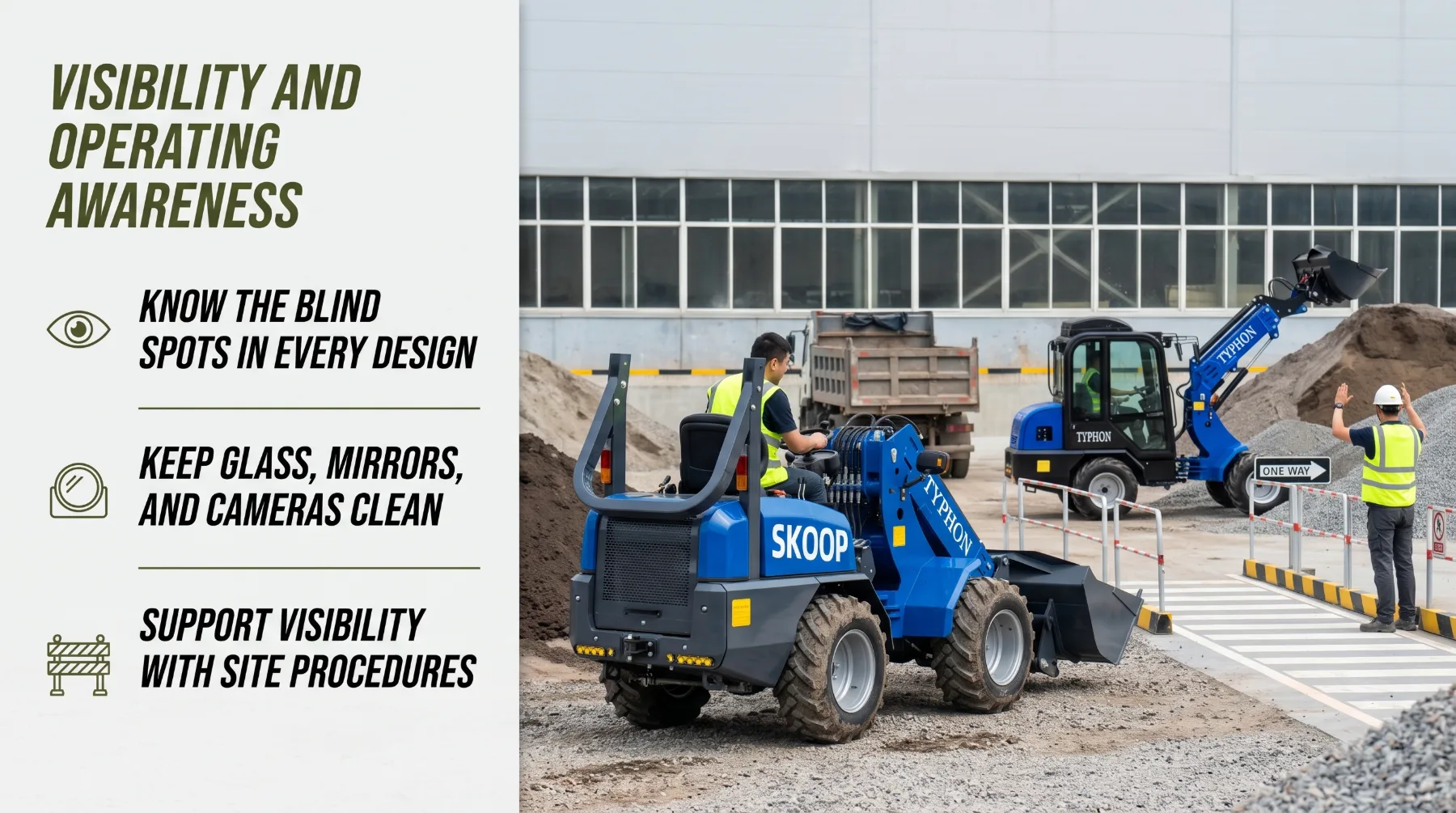
Wheel loaders work in busy areas alongside haul trucks, customer vehicles, pedestrians, and fixed structures. They reverse frequently and articulate as they steer. Both designs need good sightlines, and both have limits.
An open canopy can provide an unobstructed view in some directions. There's no glass to reflect the sun, fog up, or collect mud and dust. Operators can also hear horns, warnings, and ground crew more easily, which supports situational awareness on busy sites. Canopies still have blind spots, however. Canopy posts, lift arms, the bucket, the engine hood, and the counterweight all limit visibility, especially to the rear and at the far corners of the machine.
Many modern enclosed cabs use large glass areas, slim pillars, and curved windshields to improve sightlines. Even so, enclosed cabs introduce factors operators must manage, including window frames and door pillars, sun glare and reflections on the glass, condensation in cold or humid weather, rain, mud, snow, and dust on windows, and a reduced ability to hear outside warnings with the door closed. Wipers, defrost, and clean glass keep these issues under control, but neglected glass can quickly turn a clear cab into a hazard.
Some blind spots exist regardless of operator station design. They include the area directly behind the counterweight during reversing, the bucket corners and ground ahead when the bucket is raised, the rear tires during tight articulated turns, and low objects and people close to the machine. Check visibility with the bucket at ground level, at carry height, and fully raised at a truck. Those positions reveal where the two designs differ most on the machine you're considering.
Visibility aids help close the gaps. Use mirrors adjusted for each operator and keep them clean. Rear cameras, radar, and object detection systems can improve awareness where fitted. On canopy machines, confirm that cameras and displays are suited to outdoor exposure. Site procedures matter just as much as equipment. Separate pedestrian walkways from loader travel routes, set one-way traffic patterns for trucks where possible, use horns, backup alarms, and warning lights, require eye contact with the operator before anyone approaches, and use a trained spotter in congested areas or near customers.
Key takeaway: Open canopies may offer unobstructed views in some directions, while enclosed cabs add frames and potential reflections. Both have blind spots, so keep glass and mirrors clean, use cameras or spotters where fitted or required, and support visibility with clear site traffic procedures.
Enclosed Cab Protection
An enclosed cab surrounds the operator with a roof, doors, and windows built around the machine's protective structure. It creates a separate working space that can stay warmer, cooler, cleaner, and quieter than the surrounding site, depending on its design.
Enclosed cabs vary widely. Depending on the model and configuration, they may include heating and defrost for cold-weather work, air conditioning for hot climates and long summer shifts, ventilation with fresh-air intake, cab air filtration and, on some designs, pressurization, as well as sound insulation, front and rear wipers and washers, work lights, mirrors, camera mounting points, and operator conveniences like a radio and storage. A basic enclosure may only block wind and rain with a heater and fan, while a fully equipped cab may offer automatic climate control, pressurized filtration, and upgraded seating. Inspect the specific configuration rather than assuming every enclosed cab is equipped the same way.
Climate control turns an enclosure from a shelter into a productive workspace. Heat keeps hands and feet warm through early starts and winter loading. Defrost keeps glass clear, which is a safety function, not just a comfort feature. In cold or humid weather, fogged glass can hide the bucket, trench edges, and nearby workers within minutes. Air conditioning cools the cab and lowers humidity, helping operators stay alert through hot afternoons. Confirm in writing whether heating, air conditioning, and defrost are standard or optional on the exact configuration you plan to purchase.
An enclosed cab can also reduce exposure to rain, snow, wind, sun, some noise, and airborne particles. Its effectiveness depends on cab construction, door and window seals, filtration, and maintenance. Worn seals, a door left open, or a clogged filter can quickly reduce that protection. Enclosed cabs provide a primary door and an emergency exit, often through a rear or side window. Every operator should know how to use the emergency exit before starting work. As with canopies, the seat belt must be worn, and the cab structure must never be modified.
Key takeaway: An enclosed cab can add climate control, ventilation, filtration, and sound insulation around the protective structure, creating a more controlled working environment. Features and protection levels vary widely, so inspect and confirm the exact configuration before purchase.
Weather and Temperature Management
Weather often decides which design makes sense. A configuration that works well in a mild coastal climate may be a poor fit for a business loading salt through freezing winters or working long shifts in desert heat.
Open canopies work well when exposure is manageable and access matters more than shelter. Good fits include mild, temperate climates with few extreme days, seasonal work that stops during harsh weather, short operating periods spread through the day, farm and nursery tasks with frequent dismounting, and covered or partly sheltered work areas. In these settings, an open canopy keeps the operator connected to the surroundings without the inconvenience of opening a door dozens of times a shift.
Enclosed cabs become more valuable as conditions get tougher. They help operators stay focused during long shifts in rain, cold, or heat, where exposure builds fatigue. Winter work such as snow removal and salt or sand loading, hot-climate production at aggregate yards and asphalt plants, early starts and late finishes when temperatures drop, and year-round operations where crews can't wait for better weather all favor an enclosed configuration. Heat stress and cold stress both slow reaction times and reduce concentration. On a wheel loader, that shows up as rougher truck loading, more spillage, and a higher chance of mistakes near people and equipment.
Many businesses work through changing seasons. Think about your full year, not just the month you're buying in. A canopy that feels perfect in May may leave operators cold and wet by November. Many buyers assume operators will simply dress for the weather. In reality, layered clothing helps but doesn't prevent wet controls, fogged safety glasses, sun exposure, or the gradual fatigue that builds over a long shift.
Key takeaway: Open canopies suit mild climates, seasonal work, and frequent dismounting, while enclosed cabs pay off during long shifts in rain, cold, or heat. Plan around your full working year and your most demanding regular conditions.
Noise, Dust, and Operator Fatigue
Noise, dust, and fatigue build quietly across a shift. Operators may not notice their effect in the first hour, but they often notice it by the eighth. The operator station design plays a major role in how much of each reaches the person in the seat.
Engine noise, hydraulic sounds, and the impact of material in the bucket all contribute to noise levels at the operator station. An enclosed cab with good sealing and insulation can reduce the noise reaching the operator, which helps lower fatigue and makes radio communication easier. An open canopy offers little separation from these sources. Noise levels vary by machine, engine, workload, and configuration. Check the manufacturer's published operator sound level where available, and follow the hearing protection requirements that apply to your site.
Dust protection depends on three factors: sealing, which keeps outside air from leaking through gaps around doors, windows, and panels; filtration, which cleans the air drawn into the cab through the ventilation system; and pressurization, where fitted, which keeps slightly higher pressure inside the cab to resist unfiltered air. An open canopy provides minimal separation from site dust, while an enclosed cab may reduce exposure significantly when properly designed, sealed, and maintained. Neither design guarantees complete protection. Dust from handling crushed concrete, brick, and some rock and sand can contain respirable crystalline silica, which poses serious health risks with prolonged exposure. If dust is a major concern, review the cab's sealing and filtration specifications and combine the cab with water suppression, reduced drop heights, and required respiratory protection.
Operator fatigue can result from heat, noise, dust, vibration, and uncomfortable seating or controls. An enclosed cab helps reduce exposure to several of these factors, while seat adjustment, suspension, control layout, and ride quality affect comfort in both cab and canopy designs. Compare published specifications, inspect cab seals, and check available configurations for dusty or noisy working environments before choosing a machine.
Key takeaway: A properly designed, sealed, and maintained enclosed cab may reduce exposure to noise and airborne particles, while an open canopy offers less environmental separation. Protection varies by equipment, so review sealing and filtration specifications when dust or noise is a major concern.
Cost, Maintenance, and Application
Purchase price is only part of the comparison. The right configuration balances upfront cost, maintenance needs, and how well the operator station supports the work over years of service.
Open canopy machines generally have fewer operator station components to maintain. Enclosed cabs add parts that need regular care, including doors, hinges, and latches, door and window seals, glass or polycarbonate panels, wipers and washers, cab air filters, heating and air conditioning systems, and pressurization components where fitted. Canopy machines still need attention. Seats, controls, switches, and displays face more rain, sun, and dust, so inspect and clean them regularly.
The lowest purchase price isn't always the best value. An enclosed cab may pay for itself through longer working seasons, reduced operator fatigue, better retention of skilled operators, and fewer weather delays. An open canopy may be the smarter investment for light, seasonal, or short-cycle work in mild conditions. Consider resale value as well. In regions with cold winters or hot summers, enclosed-cab loaders are often in stronger demand on the used market.
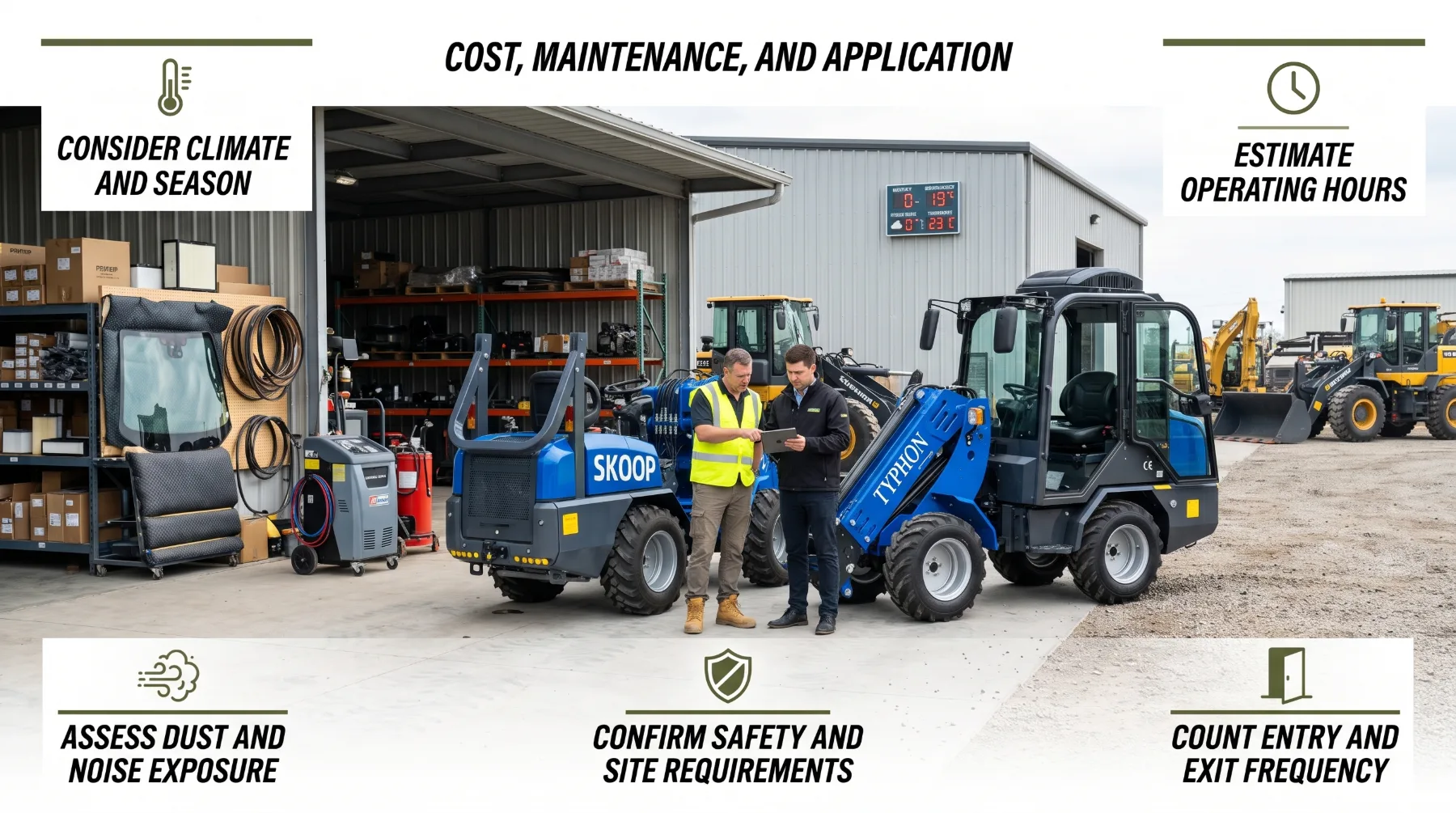
Before you decide, evaluate five key factors: how often your crew works in rain, snow, cold, or heat and how long your working season lasts; your daily and annual operating hours, since long shifts make comfort far more valuable; the amount of dust and noise your materials and applications create; how often operators leave the machine for customers, tickets, inspections, or ground tasks; and the protective structure ratings, debris protection, and any site or customer rules that apply. Finish with a demonstration. Have each regular operator test seating, visibility, controls, and climate features during realistic loading cycles.
Key takeaway: Open canopy machines may cost less and have fewer cab components to maintain, while enclosed cabs add doors, seals, glass, and climate systems that need service. Weigh purchase price against operating hours, weather, dust exposure, and maintenance, then choose the configuration that supports your work environment.
Conclusion
Wheel loader cab and open canopy designs provide different levels of weather protection, operator comfort, and maintenance requirements. Open canopies offer easy access, natural airflow, simpler construction, and often a lower purchase cost, while certified protective structures provide specified levels of rollover and falling-object protection where equipped. Enclosed cabs add climate control and ventilation, with suitable filtration and sealing potentially reducing exposure to dust and noise during long shifts and harsh weather. Both designs have visibility advantages and blind spots, making clean windows and mirrors, cameras, spotters where necessary, and clear site procedures important for safe operation. Actual protection depends on the equipment’s certified specifications, configuration, and condition, so buyers should verify the features of each model. Selecting the right design starts with considering local climate, annual working conditions, daily operating hours, and the amount of dust, noise, and debris generated by each application. Operators’ need to enter and exit the machine throughout the shift should also be considered. Protective structure ratings and cab features should be confirmed in writing, followed by a demonstration under conditions similar to the intended jobsite. This allows operators to assess comfort, visibility, access, and control layout before the final purchase decision.
Frequently Asked Questions
Is an enclosed wheel loader cab more comfortable?
It can be, especially during long shifts in challenging weather or dusty conditions. Heating, air conditioning, defrost, and sound insulation help operators stay alert and accurate. Comfort still depends on seating, controls, and ride quality, so test the cab before purchase.
Does an open canopy provide weather protection?
An open canopy provides overhead cover through its protective structure, which can shield operators from some sun and rain. However, the operator remains far more exposed to wind, driving rain, cold, heat, and dust than in an enclosed cab. Suitable clothing and PPE become important.
Which design provides better visibility?
Visibility depends on the machine's layout, pillar and post placement, glass area, mirrors, cameras, and working conditions. Open canopies avoid glass reflections and fogging, while enclosed cabs keep glass clearer in rain with wipers. Check sightlines with the bucket at ground level, carry height, and dump height.
Which configuration costs less to maintain?
An open canopy may have fewer cab-related components, such as doors, seals, filters, and climate systems. Total maintenance costs, however, depend on the complete machine, its operating hours, and its working environment. Canopy seats and controls also face more weather exposure and need regular care.